Site-to-site VPN: keep your teams, projects, and offices connected
Create a site-to-site VPN that connects your internal LAN through a virtual private gateway and a dedicated IP server, ensuring fast, reliable connectivity across locations.

14-day money-back guarantee
Trusted by industry leaders worldwide:


15,000+
Businesses protected
10 min
Average time to deploy
40+
Global service locations
600
IT hours saved yearly
OVERVIEW
What is a site-to-site VPN?
A site-to-site VPN allows secure connections between multiple networks, such as corporate offices and remote sites, anywhere in the world. It enables organizations to securely share data over the internet, providing an efficient and cost-effective way to connect distant locations.
BEHIND THE SOLUTION
How does a site-to-site VPN work?
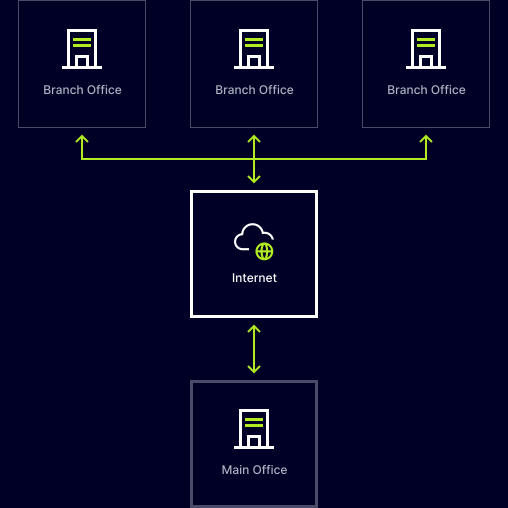
A site-to-site VPN securely connects networks by encrypting traffic and preventing unauthorized access. It ensures safe data exchange between offices, remote sites, and even trusted third-party organizations to keep communication private and protected.
Create one secure network across every office you run
Get site-to-site connectivity with the NordLayer Premium plan, starting at $14 per user per month.

THE BENEFITS
Why choose a site-to-site VPN?
A site-to-site VPN provides a reliable and secure way to establish an encrypted connection to a hybrid network remotely. It’s ideal for companies with distributed teams or remote offices that need seamless access to internal resources across locations, without sacrificing performance or security.
NordLayer also supports secure remote access for users who need to connect to their office network from different locations, with granular user access controls and network policies that keep every connection governed from one place.

Keep every site-to-site transfer private
All data transmitted between sites is encrypted end-to-end, reducing the risk of cyberattacks, unauthorized access, or data leaks. You can also monitor traffic across every connected location, so unusual activity gets spotted before it becomes a problem.

Reach locations that a static IP can’t
Connect branch offices and remote sites even when a static public IP isn’t available. Dynamic site-to-site automatically reestablishes the tunnel when the remote IP changes, making connectivity easier to maintain across distributed locations.

Scale to new locations without friction
A site-to-site VPN allows businesses to scale securely as they grow, connecting new offices, branch locations, and cloud networks with ease. With support for dynamic public IPs, you can also connect locations where a static IP isn’t available or practical.

Keep work moving when one site goes down
By keeping all offices connected at all times, site-to-site VPNs help ensure uninterrupted access to critical systems and files. Even in the case of disruptions at one location, teams in other locations can continue working without delays.
NordLayer + CrowdStrike: secure your network and endpoints all at once
With threats coming from all sides, your business can’t afford to leave anything unprotected. NordLayer and CrowdStrike secure both your company network and employee devices, so your teams stay safe and productive.
Monitor and control who can access your company network.
Stop threats like malware and phishing with AI-powered protection.
Keep your business compliant with the latest data security standards.


CONNECTIVITY AT SCALE
Connect multiple company sites & cloud networks
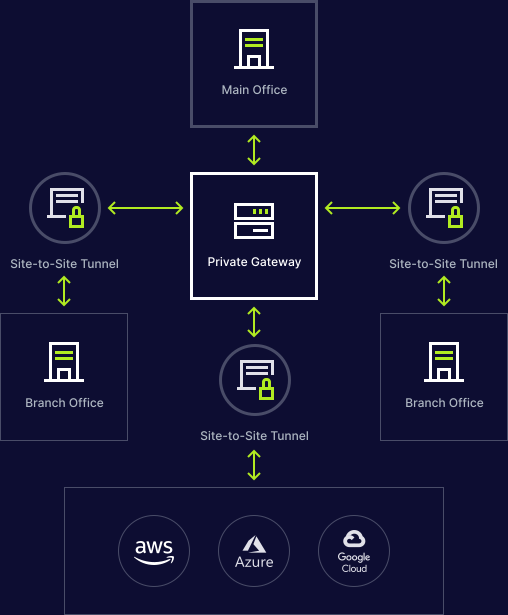
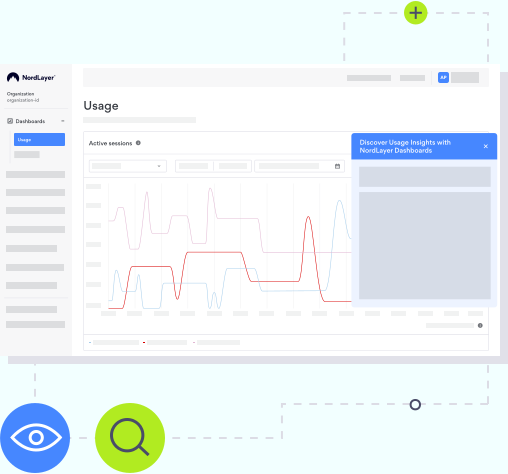
Create a secure VPN connection between multiple offices, branch sites, and cloud networks without exposing traffic to the public internet. With NordLayer, you can link LAN-to-LAN networks through a single encrypted connection, so teams can access shared systems, internal apps, and files as if they were on the same site. Centralized controls make it easy to manage gateways, policies, and traffic across every connected location.
Try before you buy: Explore NordLayer in an interactive demo
Explore features like Custom DNS, a dedicated IP, VPN Split Tunneling, and more, all in real-time with our interactive Control Panel demo
TAILORED FOR YOUR BUSINESS
Site-to-site VPN types explained
Site-to-site VPNs come in two forms, designed to fit different business needs. With NordLayer’s flexible security solution, you get both options, ensuring secure and seamless network connectivity for your organization.
Intranet-based VPN
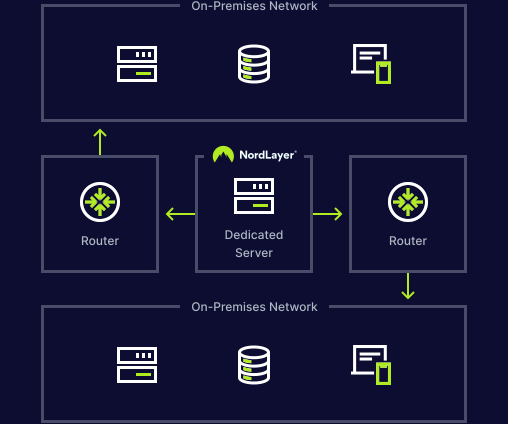
Intranet-based VPNs are part of a site-to-site VPN setup, where different teams or offices within the same company are connected over the internet using a shared internal network. In this case, the whole organization uses the same connection, with no external connections needed.
Extranet-based VPN
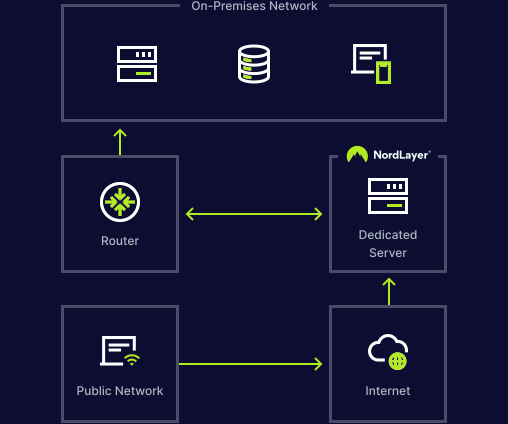
Alternatively, extranet-based VPNs are a part of a site-to-site VPN setup that connects different companies over the internet. With numerous secure connections enabled, trusted users outside of the organization can access resources.
OUR SOLUTION
Implement site-to-site VPN with NordLayer
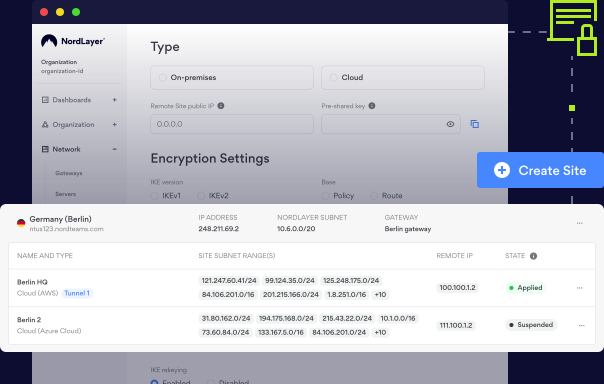
Getting started with a site-to-site VPN takes minutes with NordLayer. Using a dynamic public IP? Enter 0.0.0.0 as the remote IP when configuring your site.
- 1
Register
- 2
Create a virtual private gateway
- 3
Create a Site and configure your remote network
- 4
Connect your site-to-site tunnel
ADVANCED SECURITY
SASE: a modern solution for connecting remote offices
The shift to cloud computing and remote work saw companies rapidly adopt networking technologies to accommodate safe working regardless of their employees’ geographical location. Site-to-site VPNs aid businesses that need to securely connect their offices, remote sites, and cloud networks. Whereas secure access service edge (SASE) encompasses numerous solutions—including site-to-site VPNs—allowing organizations to implement zero-trust network access policies that protect all users, including remote workers, on and off-site.

Secure access service edge (SASE)
Secure company data, resources, and all network users with SASE.
ADDITIONAL INFORMATION
Frequently asked questions
Yes. NordLayer sites supports remote locations with dynamic public IP addresses. When configuring your Site, enter 0.0.0.0 in the “Remote IP” field. Your remote router or firewall must initiate the tunnel, and the connection will automatically re-establish when the public IP changes.
While the terms Site-to-site VPN and remote access VPN are often used to describe different ways of connecting networks and devices, definitions can vary across the industry. Generally, a site-to-site VPN refers to connecting entire local area networks (LANs)—for example, linking branch offices, data centers, or cloud environments into one secure corporate network.
Remote access VPNs, on the other hand, are most commonly used to connect individual devices, such as laptops or smartphones, to a corporate network. This approach is popular for enabling remote employees to access internal resources from virtually any location.
However, the line between these concepts isn’t always clear-cut, and in many cases, both terms describe technologies designed to securely access networks or devices remotely. The right choice depends on how your organization’s infrastructure is set up and how your teams need to connect.
A site-to-site VPN usually connects two or more separate local networks, like branch offices or data centers, so they can share resources securely.
A point-to-point VPN establishes a secure connection directly between two endpoints, such as two servers in different locations or a dedicated link between specific devices.
A point-to-site VPN allows individual devices—like employee laptops or remote desktops—to securely connect to a private network from anywhere.
A site-to-site VPN is a good choice when your organization needs to securely connect remote physical networks or cloud environments to your main corporate network. For example, you might use it to link branch offices, data centers, or services like AWS, Google Cloud, and IBM Cloud. This setup makes it easier to share resources, maintain consistent security policies, and support collaboration between teams in different locations.
The main advantage of a site-to-site VPN is that it enables hybrid work by securely connecting remote networks and offices through encrypted tunnels. This approach is especially valuable for organizations handling sensitive information that requires protected remote access.
A potential drawback is that it involves a more complex setup and infrastructure compared to individual user VPNs, often requiring a third-party provider to configure and maintain the connection.
While NordVPN is designed for individual users seeking personal online privacy, it does not support site-to-site VPN functionality. Businesses that need to securely connect office networks should consider NordLayer, a business-focused solution within the NordVPN family.
NordLayer offers site-to-site VPN capabilities, enabling secure, encrypted communication between office locations, data centers, or cloud environments. This setup allows companies to link distributed networks without the need for traditional on-premise infrastructure, making it ideal for modern organizations with hybrid or remote office models.
With NordLayer, you can set up a site-to-site VPN using the Premium plan, which starts at just $14 per user, plus $40 per month for a dedicated server. This setup is ideal for businesses with remote offices or distributed networks that need secure and reliable connections between multiple locations. The cost is predictable and scalable, making it a flexible option as your organization grows.
A site-to-site VPN works by establishing an encrypted tunnel between networks, such as company headquarters and remote offices. This tunnel uses the public internet to securely transmit data between locations, while keeping that data private and protected from external threats.
Each network is typically connected through a VPN gateway device, which handles the encryption and decryption of traffic. Once the site-to-site VPN is set up, users at each location can access shared resources—like internal systems, file servers, or applications—as if they were all on the same local network. This setup ensures secure communication across distributed networks and eliminates the need for individual remote access configurations. It’s a scalable and efficient solution for businesses that rely on constant connectivity between locations.