Summary: Encrypted DNS traffic is the process of shielding your internet lookups. Learn about its protocols, benefits, limitations, and how organizations can improve DNS security.
Encrypted DNS traffic refers to DNS queries protected by encryption so that third parties cannot easily see, monitor, or manipulate the websites and services users access online. By securing DNS requests, organizations and individuals can improve privacy, reduce cyber risks, and make internet activity harder to intercept.
Every time you visit a website, your device sends DNS queries to a DNS server to translate domain names into IP addresses. Traditionally, these requests traveled in plain text, which meant internet service providers (ISPs), network administrators, or malicious actors could view or even alter DNS data in transit.
As privacy concerns and cyber threats have grown, DNS encryption has become a core part of network security today. It helps secure browsing activity, reduce exposure to attacks, and give security teams clearer visibility into network traffic.
How encrypted DNS traffic works
Before exploring the different encryption methods, let’s first look at how traditional DNS works in practice. DNS acts as the internet’s phonebook by translating human-readable domain names into machine-readable IP addresses.
With traditional DNS, requests are often sent without encryption, making them visible to external parties. DNS encryption changes this by protecting DNS traffic while it travels across the network.
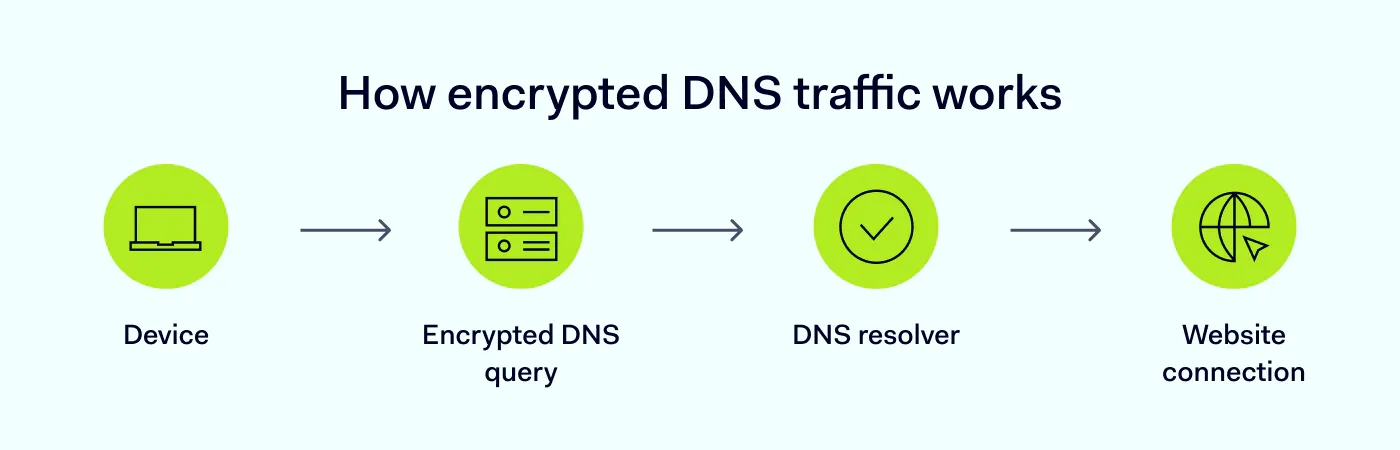
Here’s how encrypted DNS traffic typically works:
A user enters a website address. When someone types a domain name into a browser, the device first needs to find the IP address connected to that website. That triggers a DNS request.
The DNS query gets encrypted. Instead of sending the request as plain text, an encryption protocol secures the query before it leaves the device. This prevents internet service providers, public Wi-Fi operators, and malicious actors from viewing the requested domain.
The encrypted request travels to a DNS resolver. The encrypted DNS traffic is sent to a compatible DNS resolver or DNS server that supports secure encryption protocols like DNS over HTTPS (DoH) or DNS over TLS (DoT).
The DNS resolver decrypts and processes the request. Once the encrypted query reaches the resolver, it is decrypted so the resolver can find the correct IP address associated with the requested domain.
The device receives the destination IP address securely. After the lookup is done, the DNS server sends the result back through the encrypted connection. The browser can then connect to the requested website.
The website connection begins. Once the DNS request is complete, the device can load the website or online service normally. The DNS lookup itself stays hidden from outside observers throughout the process.
Because this exchange happens automatically, most users never notice it. Still, encrypting DNS traffic noticeably improves privacy and makes it harder for attackers or third parties to monitor browsing activity.
Start using NordLayer DNS filtering to enforce content policies & protect your network from malicious websites
Traditional DNS was never designed with privacy in mind. In many environments, unencrypted DNS traffic still travels openly across networks, making DNS queries visible to internet service providers, network administrators, advertisers, or anyone else monitoring the connection.
That exposure creates several security and privacy challenges that DNS encryption helps address.
Improved privacy. Without DNS encryption, internet service providers, network operators, or other third parties can monitor browsing activity through DNS queries. Encrypting DNS traffic cuts this visibility and protects sensitive browsing behavior.
Reduced risk of DNS spoofing. Attackers may try to intercept or manipulate DNS requests through methods such as DNS spoofing or cache poisoning. Encrypting DNS data lowers the chance that it will be modified while in transit.
Protection on public networks. Public Wi-Fi networks are common targets for cyberattacks. Encrypting DNS requests shields users when connecting through unsecured or shared networks.
Stronger security for remote work. Remote employees regularly connect through home networks, public hotspots, and personal devices. DNS encryption lets organizations secure DNS traffic outside of traditional office environments and reduce risks tied to remote work.
Better resistance against surveillance. In some environments, DNS traffic may be monitored, filtered, or blocked. Encrypting DNS queries keeps online activity more private and difficult to inspect.
DNS encryption does not replace broader cybersecurity protections, but it adds a useful layer of privacy and integrity to everyday internet traffic.
Types of DNS encryption protocols
Several encryption protocols are used to secure DNS traffic. While they all aim to protect DNS data, they differ in how they operate, where they are commonly used, and how easily they fit into existing environments.
DNS over HTTPS (DoH)
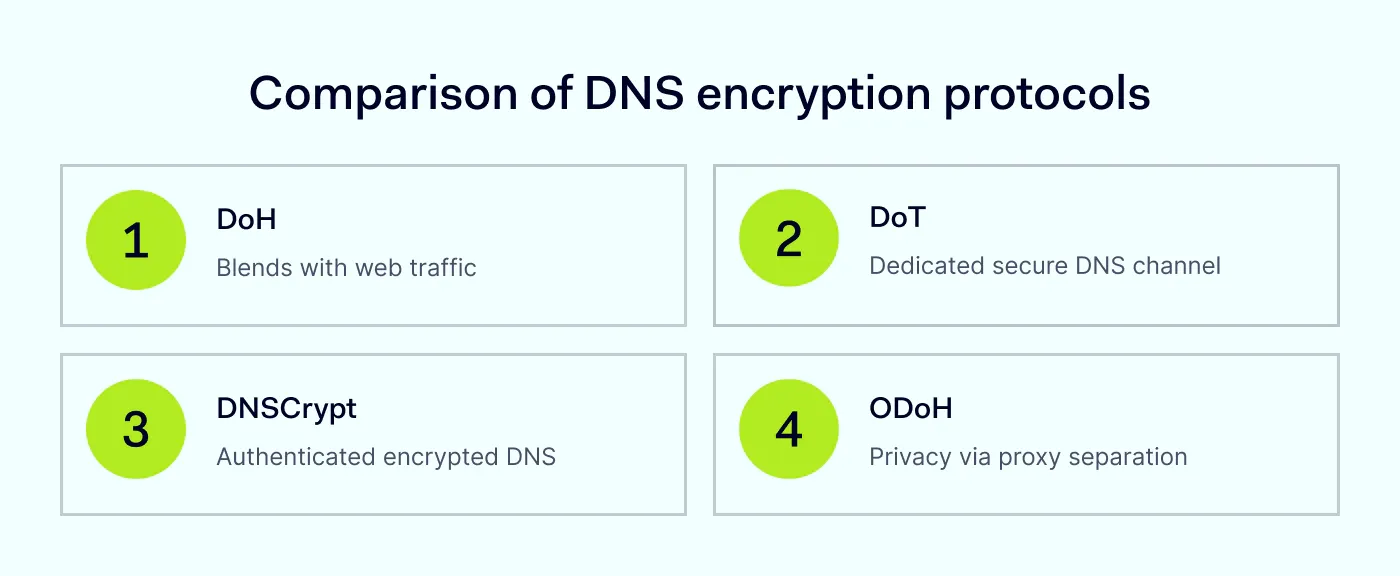
DNS over HTTPS (DoH) encrypts DNS traffic using the HTTPS protocol—the same protocol used to secure websites. DNS queries are sent through standard HTTPS connections, which makes them blend in with regular web traffic.
Because DoH traffic blends with regular web traffic, internet service providers or network administrators have a harder time monitoring or blocking encrypted DNS traffic selectively. This improves privacy but may also reduce visibility for security teams trying to inspect DNS activity.
DoH is widely supported by today’s browsers, operating systems, and public DNS providers.
DNS over TLS (DoT)
DNS over TLS (DoT) encrypts DNS traffic through Transport Layer Security (TLS). Unlike DoH, DoT typically uses a dedicated communication port set aside for DNS traffic.
That separation makes DNS traffic easier for organizations to identify, monitor, and manage within enterprise environments. Many businesses prefer DoT because it provides strong encryption while keeping clearer network visibility.
DNSCrypt
DNSCrypt is a protocol built to authenticate and encrypt DNS traffic between devices and DNS resolvers. It prioritizes preventing DNS spoofing and tampering, and it supports authentication features that verify the legitimacy of the DNS server.
While less widely adopted than DoH or DoT, DNSCrypt remains popular among privacy-focused users and some independent DNS providers, though it may require additional configuration.
Oblivious DNS over HTTPS (ODoH)
Oblivious DNS over HTTPS (ODoH) builds on DoH by adding a proxy between the user and the DNS resolver. The proxy sees the user’s IP address, but not the DNS query, and the resolver sees the query, but not the user’s IP address.
This prevents any single party from linking a user to the websites they visit, which makes ODoH one of the strongest options for DNS privacy. However, adoption is still limited, as it requires both a compatible client and a compatible resolver.
DNS encryption protocol comparison
Because each encryption method approaches DNS security differently, organizations often compare them based on privacy, compatibility, visibility, and deployment complexity.
Here is a simplified overview of the 4 differences between the most common DNS encryption protocols:
Feature
DoH
DoT
DNSCrypt
ODoH
Encryption method
HTTPS
TLS
Proprietary encryption
HTTPS + proxy separation
Default port
443
853
Variable
443
Visibility for admins
Lower
Higher
Moderate
Lower
Privacy level
High
High
High
Very high
Ease of blocking
Harder
Easier
Moderate
Harder
Common usage
Browsers and apps
Network-level DNS
Privacy-focused setups
Advanced privacy environments
All 4 options improve DNS privacy, but the right choice often depends on organizational priorities. Some businesses prioritize privacy and stealth, while others require stronger monitoring and centralized network visibility.
Advantages of DNS encryption
DNS encryption offers several security and privacy benefits for organizations and individuals.
Protects DNS queries from interception. Encryption prevents outsiders from reading DNS requests while they travel across the network.
Reduces exposure to malicious actors. Encrypted DNS traffic makes it harder for attackers to manipulate DNS data or redirect users to malicious websites.
Improves user privacy. DNS encryption limits the visibility of browsing behavior for ISPs, public Wi-Fi operators, and other third parties.
Supports secure remote work. Organizations can better protect employees connecting through external networks and personal devices.
Helps secure cloud applications. Today’s businesses rely heavily on SaaS platforms and cloud services that continuously generate DNS requests.
Strengthens compliance efforts. Encrypting DNS traffic can help organizations meet internal privacy and security requirements.
Despite its benefits, DNS encryption alone is not a complete security solution. Organizations should understand its limitations to avoid overestimating the protection it provides.
Several challenges still exist when deploying encrypted DNS across modern environments.
Limited visibility for administrators. Some encryption protocols may reduce network visibility, making monitoring and troubleshooting more difficult.
Potential policy enforcement challenges. Organizations that need to inspect or filter DNS traffic may struggle to block encrypted DNS selectively.
Does not encrypt all internet traffic. DNS encryption protects DNS requests only—it does not secure all browsing activity or application traffic.
Configuration complexity. Deploying encrypted DNS across large environments may require changes to devices, browsers, applications, and network settings.
Compatibility considerations. Some legacy systems, older devices, or enterprise tools may not fully support current DNS encryption protocols.
Potential performance overhead. Encryption and decryption processes may slightly increase latency, although most systems keep the impact minimal.
Strengthening DNS security with NordLayer
Encrypted DNS traffic helps protect DNS queries from interception, monitoring, and manipulation. As organizations rely on cloud applications, remote work, and internet-based services, securing DNS traffic becomes critical for both privacy and cybersecurity.
DNS encryption is an important step toward securing network traffic, but it is not a complete security solution on its own. Organizations often need additional controls to manage threats effectively.
NordLayer’s DNS filtering controls which domains users can access, while web protection blocks malicious sites before a connection is even established. Together, these features reduce the risk of phishing and prevent users from accessing harmful or unwanted content.
When combined with encrypted DNS traffic, these controls give organizations stronger protection for remote work, cloud environments, and distributed teams—helping them reduce exposure to malicious actors and gain clearer visibility into DNS activity.
Agnė Srėbaliūtė
Senior Cybersecurity Copywriter
After spending a decade writing across media, PR, and advertising, Agne has been specializing in technology and cybersecurity content, focusing on IP address management, networking, zero trust, and internet infrastructure. She helps businesses understand complex technologies through clear, engaging, and sometimes creative content.