Breach intelligence: what is it, and why does it matter?
Maciej Sikora
Summary: Breach intelligence is about monitoring malicious channels for compromised company data. It helps organizations detect and respond to potential breaches faster.
Key takeaways
Breach intelligence focuses on monitoring the dark web, breach forums, and other sources for an organization’s exposed data.
Breach intelligence matters because it helps organizations detect compromised data early, giving security teams more time to respond and reduce potential damage.
According to IBM’s 2026 report, organizations take an average of 247 days to detect and contain a breach. Breach intelligence aims to reduce this time to just hours.
Companies can easily implement breach intelligence by using existing solutions, such as NordLayer Intelligence, which monitor the dark web and other sources and alert teams to potential threats.
What is breach intelligence?
Breach intelligence is the process of monitoring sources such as dark web marketplaces, breach forums, and leak sites for company information exposed in data breaches, such as stolen credentials, customer data, or internal documents. It helps businesses detect exposure risks early and take action to protect their resources.
To understand breach intelligence, it’s useful to distinguish between a data breach vs. data leak. A data leak refers to the accidental or intentional exposure of sensitive information, such as when an employee sends it to the wrong person. A data breach, on the other hand, occurs when an unauthorized third party gains access to information, often through a cyberattack. Breach intelligence, as the name suggests, focuses on data exposed through the latter.
How does breach intelligence work?
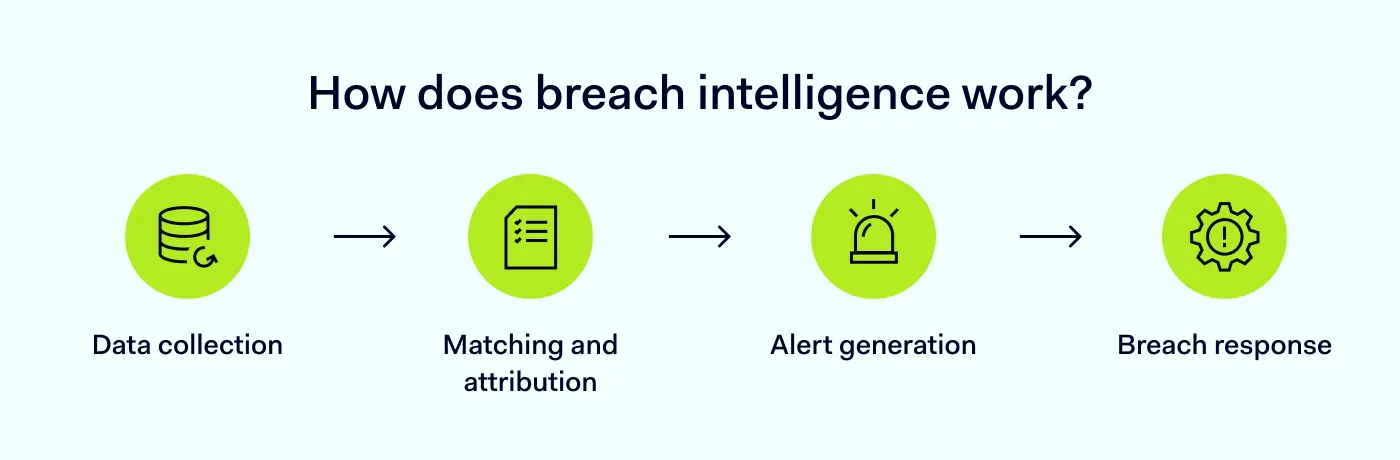
Breach intelligence follows a simple, 4-stage process that helps organizations act before attackers do. Here’s what each stage involves:
Data collection. The first step is about gathering information from places where compromised data often surfaces, such as the dark web, hacking forums, Telegram channels, and paste sites. The goal is to gain clear visibility into the data available across these sources.
Matching and attribution. The collected data is then checked against the organization’s assets, like email addresses, usernames, and passwords, to flag anything linked to the business.
Alert generation. When a match is found, the organization receives an alert with key details about the breach, including what was exposed, where it was found, and when it happened. This helps the company assess the severity of the situation.
Breach response. The final step is about taking action to contain the threat. This can include forcing password resets, revoking active sessions, or deactivating compromised accounts.
Why breach intelligence matters
Breach intelligence is important for two reasons: first, data breaches have been on the rise for years, and second, even more worrying, some companies might not know they’ve been breached at all—not until more damage has been done.
According to IBM’s 2026 Cost of a Data Breach Report,organizations take an average of 247 days to identify and contain breaches. This means sensitive data can stay exposed for months before a company realizes there’s a problem. Breach intelligence helps cut that window from months to hours, allowing businesses to identify compromised data faster and stop attackers before they can take advantage of it. Given the average breach cost of $4.99 million (IBM, 2026), every minute shaved off breach detection time matters greatly.
Beyond that, breach monitoring can help identify risks that originate outside the organization, such as those involving vendors and other external partners. Verizon’s Data Breach Investigations Report found that nearly 30% of breaches originate from third parties. So even if a company’s own defenses are strong, a breach at a vulnerable vendor can still put its data at risk. That’s why it makes sense to keep tabs on what’s happening on the partner side.
What may come as a surprise is that breach monitoring can also make it easier to keep up with compliance requirements. Regulations such as GDPR and CCPA require companies to notify affected individuals and authorities within specific timeframes after a breach is detected. And if it’s detected early, organizations have more time to meet those deadlines.
What sources does breach intelligence monitor?
Breach intelligence involves monitoring various platforms and channels where stolen or otherwise compromised data tends to circulate, including:
Dark web marketplaces and forums. Platforms where threat actors often trade stolen credentials, databases, and other sensitive information.
Leak forums. Online communities where stolen company data is frequently shared, often by hackers or data brokers.
Telegram channels: Messaging groups where stealer logs—collections of data stolen by infostealer malware—are reportedly shared or sold.
Paste sites. Public websites where leaked or stolen data is shared, either temporarily or permanently.
Open-source intelligence (OSINT): Publicly available sources, like social media, that may be used to expose sensitive company information.
Breach intelligence vs. threat intelligence vs. breach response—what’s the difference?
Because all 3 terms are related to a specific area of cybersecurity, it’s easy to see why breach intelligence, threat intelligence, and breach response can sometimes be confused. They may sound similar, but each has a different focus and plays a distinct role in addressing cyber threats.
As we mentioned earlier, breach intelligence is about identifying data exposed in breaches, such as user credentials and customers’ personal information. This is done so organizations can react quickly to leaks and reduce the risk of that data being used for further attacks.
Cyber threat intelligence is broader in scope. It involves collecting and analyzing information about potential or emerging threats, including the tactics, tools, and motives attackers use. So, while breach intelligence focuses on data that has already been compromised, threat intelligence looks ahead. It helps organizations understand how attackers operate so they can prevent attacks before they happen.
Breach response, however, is what happens once a breach has already been discovered. It’s about managing the aftermath. You contain the threat, notify affected parties, and take steps to prevent similar incidents in the future. Unlike the other two, it’s not proactive but reactive, as it allows organizations to limit the damage and recover from the incident.
Use cases for breach intelligence
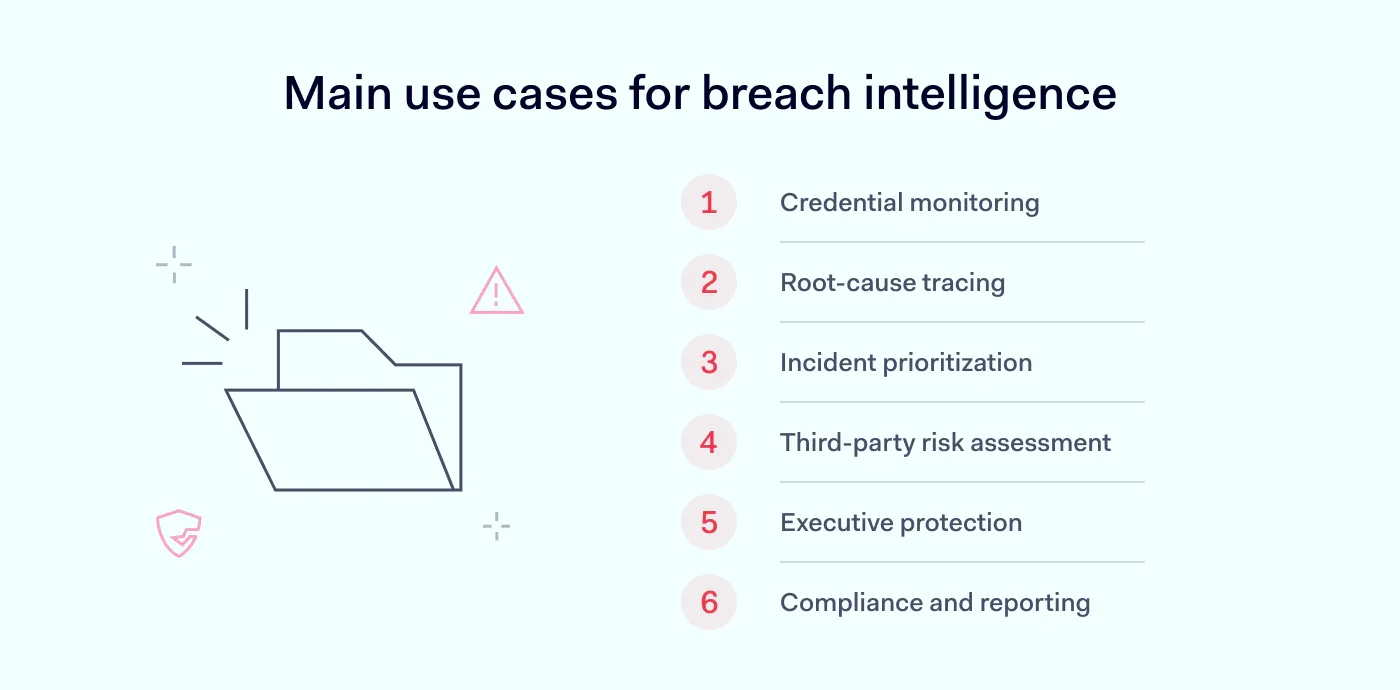
Breach intelligence has a wide range of applications for addressing cybersecurity risks, which makes it an important part of an organization’s security strategy. Key use cases include:
Credential monitoring. Detects exposed employee or customer credentials and helps initiate password resets to prevent unauthorized access.
Root-cause tracing. Helps cybersecurity teams determine how and when the breach occurred so they can take the necessary steps to mitigate its impact.
Incident prioritization. Allows security teams to identify breaches that pose the greatest risk, so they can prioritize their response.
Third-party and vendor risk assessment. Identifies sensitive data exposed through vendor or supply chain incidents, helping organizations address potential risks involving external partners.
Executive protection against phishing. Detects when information tied to executives is exposed in breaches, which helps organizations reduce the risk of spear-phishing and business email compromise (BEC) campaigns.
Compliance and reporting. Provides visibility into exposed data to support regulatory reporting.
How to implement breach intelligence effectively
Adopting breach intelligence is easier when you follow a clear roadmap. Here’s a simple checklist to get started:
Decide whether to build from scratch or use an existing solution. Determine whether you want to develop your own breach intelligence capabilities in-house or use an external platform that provides the functionalities you need.
Choose what to monitor. Identify the assets you want to protect. These can include your organization’s domains, IP addresses, employee email addresses, executive names, and customer data.
Select your sources and define depth. Decide which sources to monitor, such as dark web forums and illegal Telegram channels. Focus on the ones where your data is most likely to appear.
Integrate alerts into your workflows. Make sure that breach intelligence is built into your existing security processes and that its findings can be fed into your SIEM platform to automate and simplify incident response.
Of course, everything starts with having the right tool in place. You don’t need to invest excessive time, money, and resources in developing your own infrastructure, as solutions like NordLayer Intelligence are designed to offer comprehensive breach intelligence coverage.
With its data breach monitoring capabilities, you can automatically scan sources such as the dark web, hacker forums, and other illicit channels for exposed credentials, customer data, and other sensitive information. NordLayer Intelligence can also help your team identify malware-infected devices and react before the compromised data is used by threat actors in later attacks.
If, however, you already have security tools in place and want to add breach intelligence to your existing setup, you can use the dark web API to integrate NordLayer Intelligence feeds directly into your security stack, without adding or managing any new tools.
Before you venture into breach monitoring at scale, though, you can start with a quick cybersecurity risk assessment.Contact us for an on-demand evaluation of your organization’s dark web exposure, and we’ll provide you with a report highlighting any potential risks to your organization.
Maciej Sikora
Senior Cybersecurity Copywriter
A copywriter with 10 years of experience covering the latest in IT and cybersecurity, Maciej focuses on turning complex ideas like zero trust, AI security, vulnerability management, and threat intelligence into clear, engaging stories that keep readers informed and engaged.