
Rūta Tamošaitytė
Copywriter
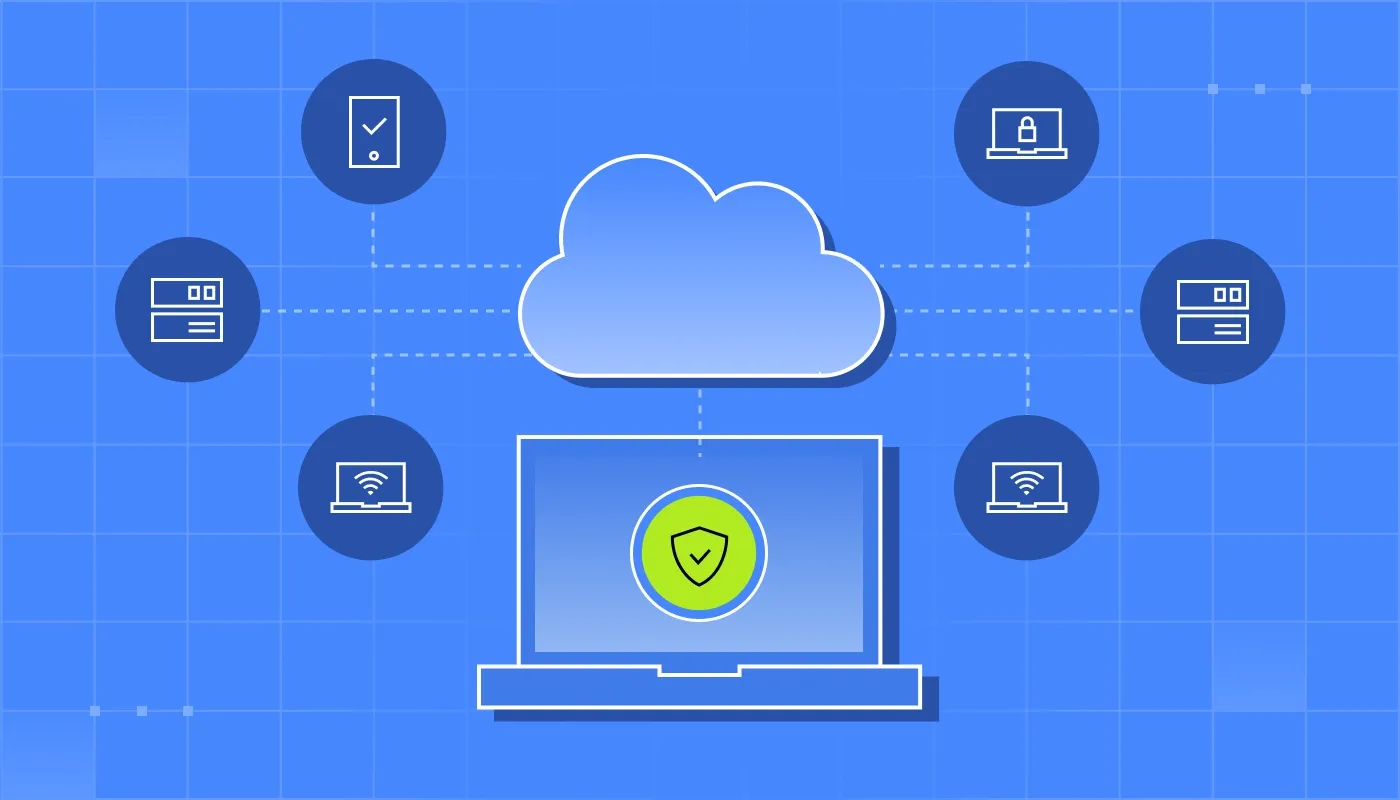
Summary: Navigating the SASE landscape can be daunting. This article simplifies your search by breaking down the essential factors you need to evaluate.
As organizations move away from traditional, perimeter-based security, Secure Access Service Edge (SASE) has become a common framework for securing distributed teams. However, the market is crowded with SASE vendors, each offering different architectures and capabilities.
Choosing a SASE provider isn’t just about ticking boxes on a technical checklist. You’ve probably already heard that SASE is not a product but a concept, or more specifically, a journey. You might already be on this journey, but fully adopting this framework requires step-by-step planning. In this blog post, we’ll break down what you should look for to ensure your network security remains proactive and manageable.
While SASE might sound like technical jargon, its purpose is simple: it combines network security and wide-area networking (WAN) capabilities into a single, cloud-delivered service to secure access for organizations.
In a world where employees are the perimeter—working from home offices, cafes, and other locations—traditional virtual private networks (VPNs) often create bottlenecks when providing access to sensitive data. SASE solves this by moving security closer to the user. It’s an essential framework for any business that needs to maintain a strong security posture without compromising on network performance. Additionally, it makes security simpler to manage in cloud-centric environments.
Selecting between various SASE providers requires a deep dive into how their infrastructure aligns with your specific operational needs. Here are the core factors to evaluate:
Unfortunately, the market is crowded with SASE vendors that have built their platforms by stitched-together offerings. This often leads to Franken-SASE—a fragmented experience with multiple management consoles. Look for a provider that offers a unified SASE platform. A single pane of glass interface allows your security team to manage policies, monitor traffic, and respond to threats from one place, often improving efficiency.
A true SASE solution must be built on the principles of Zero Trust Network Access. Instead of trusting anyone inside the network, ZTNA verifies every user and device every time they attempt to access a resource. Ensure the provider offers granular access controls, allowing you to limit permissions to only what is necessary for an employee’s role. If the SASE vendor is not providing ZTNA, it may not meet core SASE requirements for identity-centric access.
Efficiency is just as important as security. For global businesses, the public internet is often too unpredictable to serve as a reliable foundation for SASE, leading to high latency and routing issues. To avoid these performance bottlenecks, prioritize SASE vendors that offer a service-level agreement (SLA)-backed private backbone. This dedicated infrastructure bypasses common internet congestion, providing the stable, high-speed connectivity your international operations require.
In essence, SASE solutions should offer you a bundle of essential network security tools. For example, most SASE vendors include these core components:
To get the full benefit of SASE, look for a provider that uses a cloud-native approach rather than relying on hardware-heavy appliances. Traditional tools like standalone SD-WAN are often tied to physical offices, but a converged cloud platform ensures security follows your employees' identities wherever they work. Whether they are on-premises, mobile, or in the cloud, your protection stays consistent. This architecture also allows you to scale quickly—onboarding new users or branch offices in minutes without the need to ship and manage physical hardware at every new location.
Don't bite the bait: Trust no one with ZTNA
Implement Zero Trust Network Access for stronger phishing protection

Switching to a reputable SASE provider offers more than just a security upgrade; it transforms your business operations:
NordLayer is an SSE (Security Service Edge) provider within the SASE framework that supports SASE adoption by combining cloud-based networking capabilities, user-centric authentication, access control, and integrations across the cloud:
Rūta Tamošaitytė
Copywriter
Subscribe to our blog updates for in-depth perspectives on cybersecurity.