DORA compliance solutions for secure network access
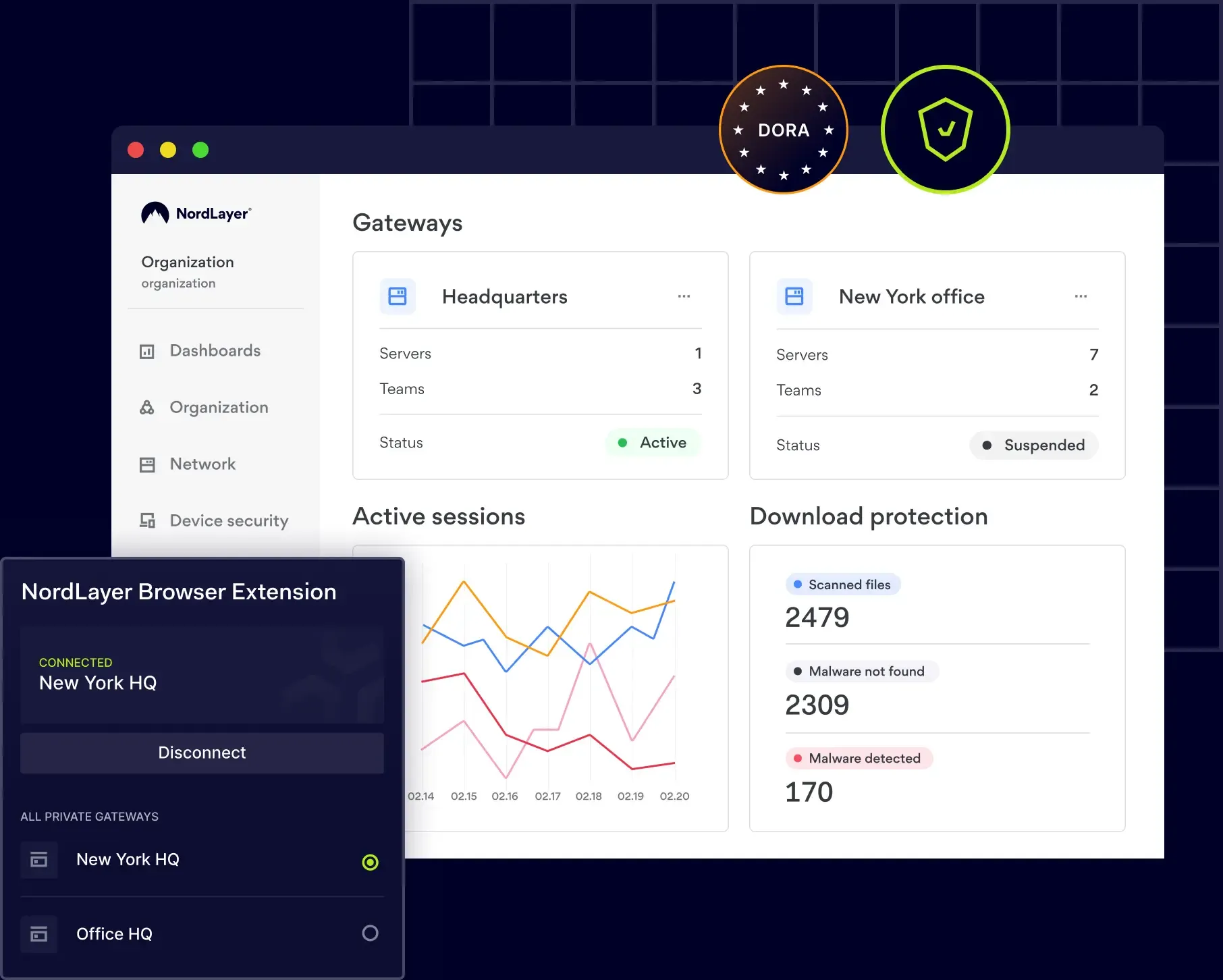
NordLayer helps financial institutions and ICT providers secure access, monitor activity, and keep the audit trail DORA compliance depends on.

14-day money-back guarantee
We're trusted by




OVERVIEW
What is DORA?
The Digital Operational Resilience Act (DORA) is an EU regulation that sets binding requirements for how financial institutions and their ICT providers manage digital risk. It has been in force since January 17, 2025, and applies to banks, insurers, investment firms, and crypto-asset service providers, along with the technology partners behind them.

WHAT’S EXPECTED
The 5 pillars of DORA compliance
Each pillar covers a different part of how financial institutions and their providers handle digital risk, and NordLayer supports the network access and monitoring controls that sit within the first one.
- 1
ICT risk management
Identify, protect against, and manage risks across all ICT systems and infrastructure.
- 2
Incident reporting
Detect, classify, and report major ICT incidents to regulators within strict timelines.
- 3
Resilience testing
Test ICT systems through vulnerability assessments and penetration testing to validate resilience measures.
- 4
Third-party risk management
Monitor and oversee critical ICT providers in your supply chain so they meet DORA’s standards.
- 5
Information and intelligence sharing
Exchange cyber threat intelligence across the financial sector to strengthen collective resilience.
SEE THE VALUE
Why NordLayer fits your DORA compliance strategy

Strengthen ICT risk management
Reduce cyber risk with zero-trust network access (ZTNA), multi-factor authentication (MFA), and granular access controls that limit who reaches what.

Track access as it happens
Dashboards and activity logs give your security team visibility into network connections, active sessions, failed login attempts, and admin actions.

Protect business continuity
Secure access to business-critical resources so teams keep working through disruptions and failures. If a server goes down or becomes unavailable, users can reconnect through another Private Gateway and keep working.
Reduce your DORA compliance risk with NordLayer
capabilities
Network controls that map to your DORA requirements
NordLayer helps you address the network security and access control layer, one of the most demanding parts of the Digital Operational Resilience Act.

Secure network access
Role-based access control, multi-factor authentication, and least-privilege policies keep critical systems accessible only to approved users and devices.
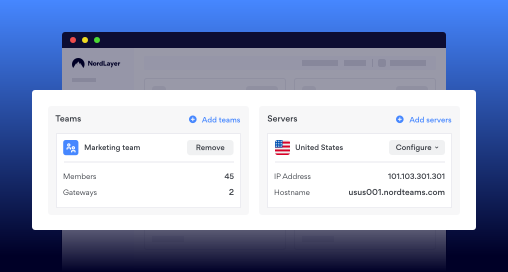
Segment your network to contain ICT risk
Virtual private gateways and cloud firewall help you segment the network, isolate sensitive environments, and limit lateral movement during a breach, so one compromised system cannot spread disruption across your financial processes.
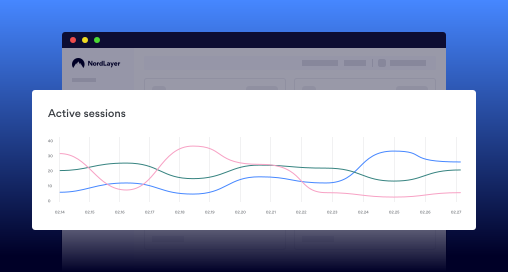
Detect incidents early across your network
Activity monitoring and instant alerts give admins visibility into who and what is connecting to the network, so you can respond to incidents faster.
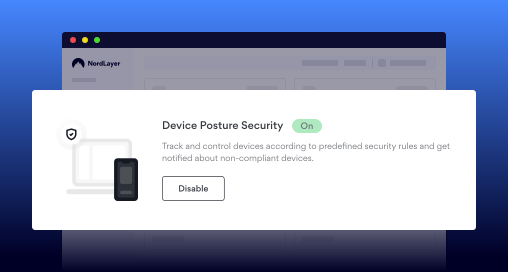
Enforce security policies across users and devices
Device posture security, identity-based access controls, and centralized policy management help keep security standards consistent across your organization and third-party access points.

Keep activity records for incident response and reporting
A continuous record of connections and access events gives your security team the evidence to investigate incidents quickly and support regulatory reporting.
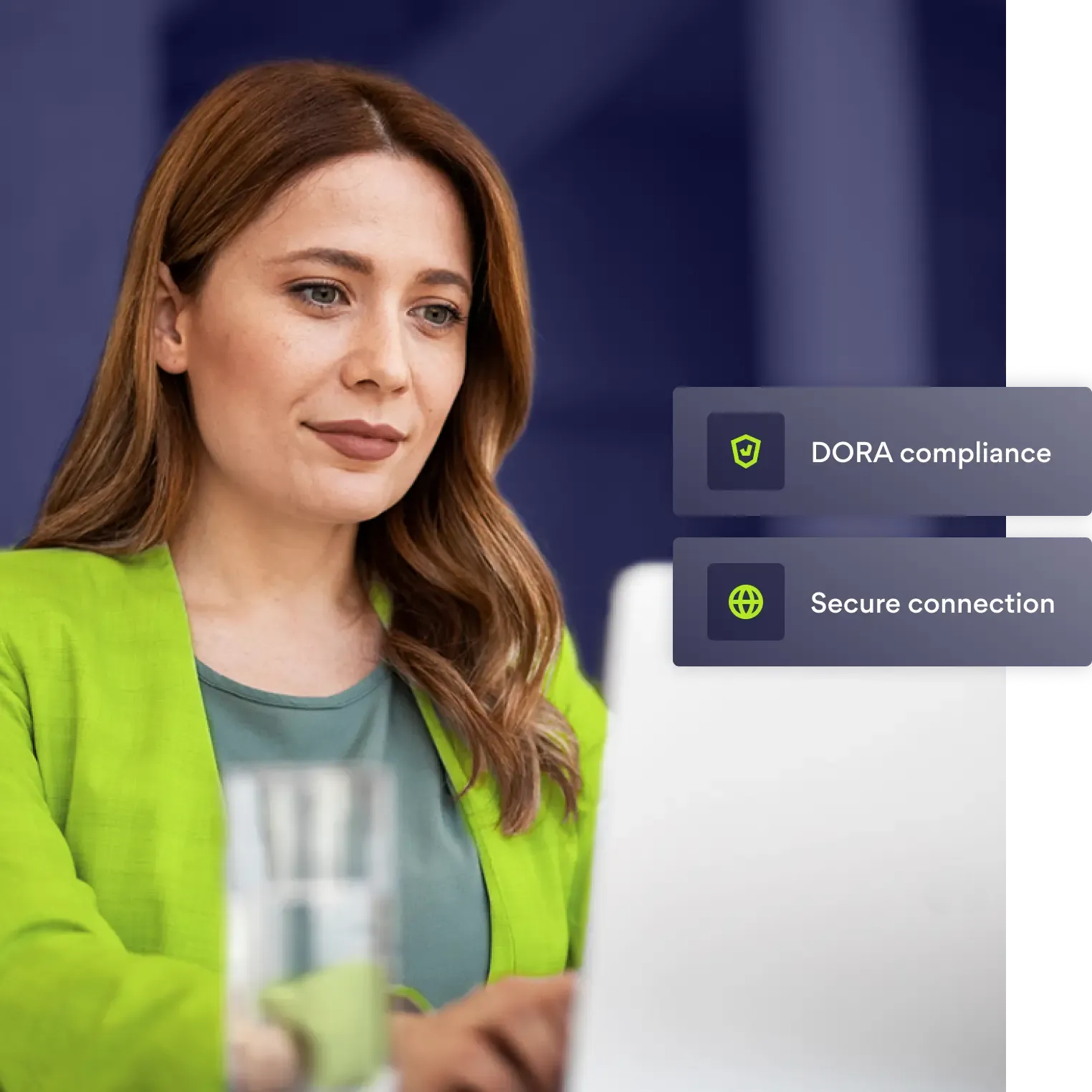
Get DORA-ready network controls built in
See how NordLayer helps financial institutions and ICT providers control who reaches critical systems and keep the evidence regulators expect.
NORDLAYER COMPLIANCE
Built on recognized security standards
NordLayer holds ISO/IEC 27001:2022 certification, passes SOC 2 Type 2 audits, aligns with the HIPAA Security Rule, and encrypts data in transit with AES-256 and ChaCha20, so your compliance is built on proven foundations.


OUR INSIGHTS
Related resources
Additional info
Frequently asked questions
NIS2 is a broad EU cybersecurity directive covering many critical sectors, while DORA is a regulation written specifically for the financial sector, so where the two overlap, DORA takes precedence for financial entities.
DORA compliance requirements span 5 pillars: managing ICT risk, reporting major incidents, conducting resilience testing, overseeing technology suppliers, and sharing threat intelligence across the financial sector.
The Digital Operational Resilience Act applies to more than 20 types of financial institutions, including banks, insurers, investment firms, payment institutions, and crypto-asset service providers, as well as the technology firms that support them.
National regulators can impose fines, remedial orders, and public notices on noncompliant financial entities, and critical ICT third-party providers overseen by the European Supervisory Authorities can face periodic penalty payments of up to 1% of their average worldwide daily turnover, applied daily for up to 6 months.
DORA directly covers financial entities operating in the EU, but non-EU technology suppliers serving them are pulled in through contract requirements, and those designated as critical must set up an EU subsidiary.