Navigate your way to HIPAA compliance
Achieve the highest security standards without advanced setups or long deployments. Choose NordLayer to protect access to your most sensitive data, with a HIPAA BAA available, and take your first step toward HIPAA compliance.
We’re trusted by


benefits
Protect ePHI with HIPAA-compliant network security
A HIPAA-compliant VPN shields Electronic Protected Health Information (ePHI) during transmission and remote access, helping healthcare providers and their business associates keep sensitive data secure and accessible.

Compliance with HIPAA safeguards
A HIPAA-compliant VPN supports key technical safeguards like encrypted communication channels, access authentication, and detailed audit logging.

Lower cyber risk exposure
VPN encryption and IP masking protect your network from threats like untrusted Wi-Fi and Man-in-the-Middle (MitM) attacks.
COMPLIANCE STANDARDS
HIPAA Requirements
To achieve HIPAA compliance, covered entities and their business associates must implement specific administrative, technical, and physical safeguards to protect Electronic Protected Health Information (ePHI). These safeguards are designed to ensure the confidentiality, integrity, and availability of sensitive health data.
HIPAA requirements for covered entities include, but are not limited to:
- Access controls – Centrally managed credentials for each user and procedures to control the release or disclosure of ePHI
- Integrity controls – Policies and procedures to ensure ePHI is not improperly altered or destroyed
- Audit controls – Mechanisms to log, record, and review activity related to ePHI access and usage
- Network security – Protection through encryption, firewalls, and other cybersecurity measures

HIPAA BAA
Make vendor compliance easier with a HIPAA BAA
Many cybersecurity providers stop at “HIPAA-ready.” NordLayer goes further, offering a HIPAA Business Associate Agreement (BAA) for eligible customers so you can meet vendor requirements with more confidence and less back-and-forth during security reviews.
Get a real-time look at how NordLayer protects businesses
Explore features like Custom DNS, a dedicated IP, VPN split tunneling, and more, all in real-time with our interactive Control Panel demo.

YOUR ROADMAP TO COMPLIANCE
HIPAA-compliant network security solution
NordLayer has been independently assessed and confirmed to meet the security objectives defined in the HIPAA Security Rules. This means our solution is HIPAA-compliant and includes the necessary safeguards to protect access to Protected Health Information (PHI).
HOW WE HELP
How NordLayer supports your HIPAA compliance
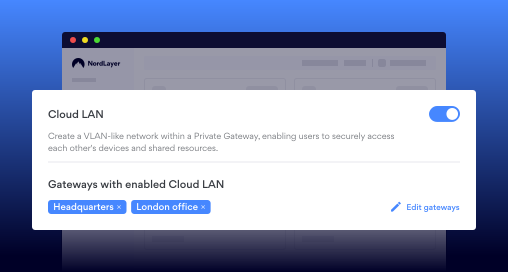
NordLayer enables secure remote access to your company’s internal systems, helping protect sensitive data across all endpoints. It adds an extra layer of security when accessing your network, cloud platforms, and databases, reducing risk while supporting HIPAA compliance.
Secure Remote Access
Today’s healthcare organizations need flexible security solutions that keep up with hybrid work and HIPAA requirements. No matter where users, devices, or data are located, they all require the same high level of network access protection. NordLayer delivers exactly that.
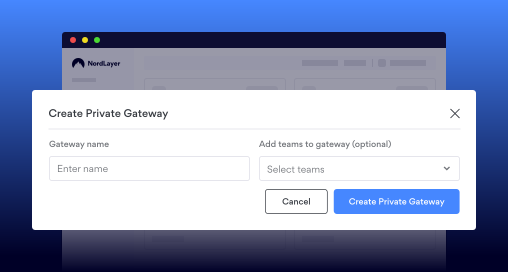
Access Control
Whether you're granting access to employees, third-party admins, or business associates, the process should be secure and straightforward. NordLayer ensures this by verifying every user’s identity before allowing network access.
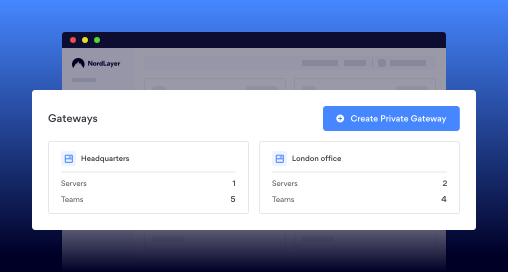
Data Encryption
Protected Health Information (PHI) is vulnerable during transmission between networks. NordLayer safeguards this data with AES 256-bit and ChaCha20 encryption—an industry-leading standard for minimizing cyber risks and ensuring sensitive information stays secure.
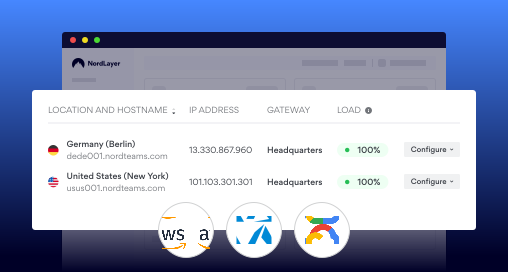
Compliance in Cloud Environments
Using cloud providers like AWS, Microsoft Entra ID, or Google Cloud Platform means entering a shared responsibility model. While the provider secures the infrastructure, it’s up to you to configure and use these services in a way that aligns with HIPAA privacy requirements.
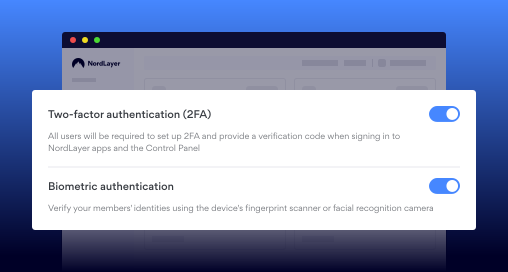
Multi-factor Authentication
MFA is a critical security layer that helps prevent unauthorized access to Protected Health Information (PHI). NordLayer enables MFA for gateway access, ensuring only authorized users reach sensitive resources. Combined with Zero Trust best practices, it significantly strengthens your overall security posture.
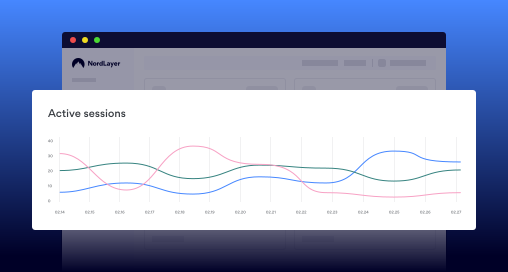
Activity Monitoring & Visibility
Understanding who and what is connected to your network is essential for maintaining security and meeting HIPAA requirements. NordLayer provides visibility into network access, connection patterns, and device posture—without monitoring individual user activity.
Need a VPN solution that complies with HIPAA?
NordLayer supports key HIPAA safeguards through strong encryption and access control features. While our VPN encrypts data in transit during connections to sensitive resources, our broader solution also helps manage and verify user access across your network. Contact us to learn how NordLayer can support your compliance efforts.
LEARN MORE
HIPAA Resources




ARE YOU COMPLIANT?
Stay ahead with our compliance expertise
NordLayer is committed to keeping your business data secure and compliant. Our product meets ISO 27001 standards and passes rigorous SOC 2 Type 2 audits. We adhere to HIPAA Security Rules and use AES-256 and ChaCha20 encryptions for top-tier data protection. Let us help you achieve compliance seamlessly.


This content has been prepared for general informational purposes only and is not legal advice. We hope you will find the information informative and helpful; however, you should use the information provided in this article at your own risk and consider seeking advice from a professional counsel licensed in your state or country. The materials presented on this site may not reflect the most current legal developments or the law of the jurisdiction in which you reside. This article may be changed, improved, or updated without notice.
Additional info
Frequently Asked Questions
HIPAA is essential because it protects patients’ rights by promoting the privacy and security of their health information. It also sets national standards for handling healthcare data, ensuring consistency across providers. By safeguarding sensitive information, HIPAA helps build trust between patients and healthcare professionals—contributing to the overall integrity and quality of the healthcare system.
HIPAA establishes four rules for safeguarding the privacy and security of a patient’s medical information. Each provides a framework for a specific field detailing how to proceed to HIPAA compliance.
- HIPAA Privacy Rule
- HIPAA Security Rule
- HIPAA Breach Notification Rule
HIPAA compliance is required for any organization that creates, accesses, shares, processes, or stores Protected Health Information (PHI).
This typically includes covered entities like healthcare providers (doctors, clinics, dentists, pharmacies), health plans and insurers, and healthcare clearinghouses. It also includes business associates such as IT vendors, consultants, accountants, and legal services that handle PHI on a provider’s behalf, plus subcontractors that those partners rely on, like cloud hosting, data storage, or secure document disposal services.
HIPAA-compliant entities must assess potential risks to PHI confidentiality, including those related to remote access. Key areas include administrative practices, physical security, IT systems security, and a crisis recovery plan. Once risks are identified, an action plan must be implemented to address them and apply the necessary administrative safeguards.
Yes. Built on the trusted technologies of NordVPN, NordLayer has been independently assessed and confirmed to meet the security objectives of the HIPAA Security Rule—making the product HIPAA compliant. Additionally, NordLayer helps organizations strengthen their compliance posture by offering key features like access control and traffic encryption.