OpenClaw security: isolate AI agents, protect your network
Autonomous agents are vulnerable to prompt injection and ignore app-level security controls. NordLayer gives security teams network-level containment to prevent the spread of risks.
Get 20% OFF yearly Premium plan licenses today with code openclaw-20.

14-day money-back guarantee
15,000+ businesses trust NordLayer to stay secure, compliant, and in control


SOC 2 compliant
ISO 27001 compliant
PCI-DSS compliant
HIPAA compliant


KNOW THE DANGERS
OpenClaw risks you inherit from day one
Every OpenClaw deployment comes with the same security implications, ranging from prompt injection to lateral movement. Here are the core risks your security team must deal with.

Exposed agent control plane
OpenClaw’s control plane is public-facing. Misconfigs or cloud exposure let attackers run malicious code via prompt injection or API abuse.

Internal network pivot risk
When OpenClaw has broad network reach, an agent fed malicious instructions can move laterally across apps, databases, and sensitive data.

Unchecked data exfiltration
Without egress controls, a compromised OpenClaw host can send sensitive data, tokens, or credentials to attacker-controlled endpoints.

Overprivileged agent access
Broad permissions expose agents to malicious OpenClaw skills that steal credentials, exfiltrate data, or hijack connected services.
GET THE SOLUTION
How to secure OpenClaw access with NordLayer
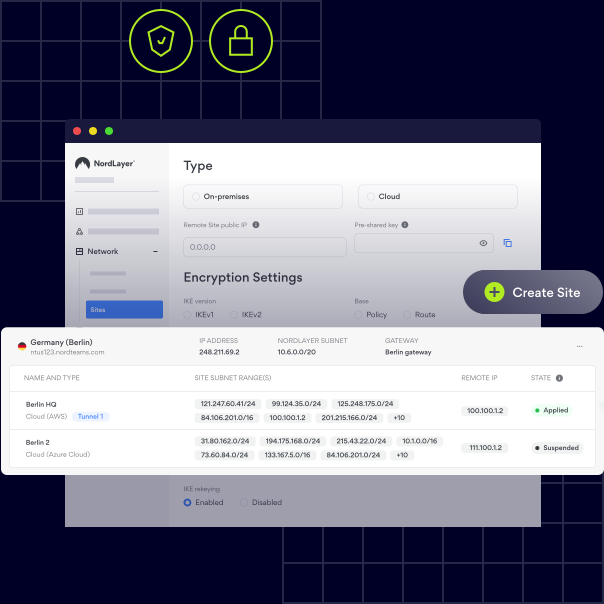
NordLayer shrinks the attack surface between OpenClaw and your sensitive data with encrypted tunnels, continuous monitoring, and segmented access deployed in minutes.
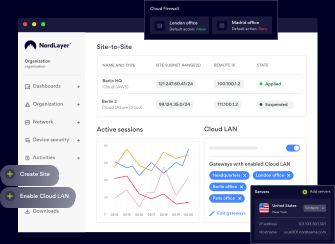

Secure tunnel deployment
Site-to-Site connectors create permanent, encrypted tunnels between your OpenClaw VPS or cloud server and your corporate network. Your deployment runs in a fully isolated environment without port forwarding, IP whitelisting, or exposed endpoints. For distributed setups, Cloud LAN creates a virtual LAN through which multiple OpenClaw instances across dev machines, staging servers, and production VPSs can communicate via private IPs.

Granular access governance
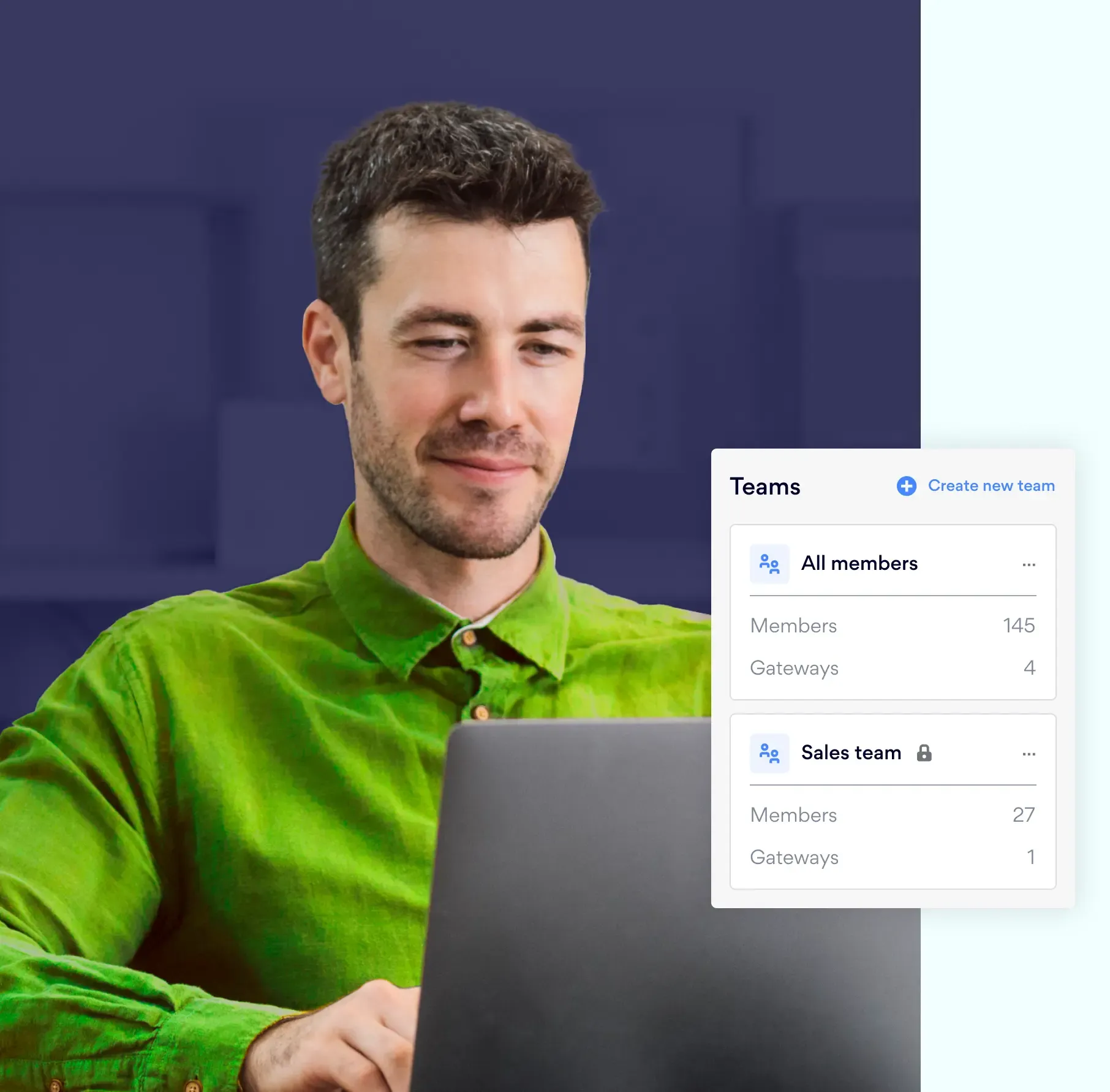
Define which resources each OpenClaw instance can reach, and enforce access control at the network layer, not just at the application level. Marketing’s instance can reach your CRM and social APIs, but it never touches financial systems. Engineering agents access dev databases, but never production ones. Stop relying on API keys or app-level permissions alone, and enforce security controls that limit the blast radius at the infrastructure level.

Contain AI agent access
Private Network Segmentation ensures that if AI agents install a malicious skill, an API key leaks, or the model is manipulated through prompt injection, they cannot access core infrastructure, employee directories, or compliance-sensitive databases. This collapses the attack surface to a single network zone, giving security teams in regulated industries compliance-ready containment without the need for manual firewall configuration.
Get 20% OFF NordLayer for OpenClaw deployments
Use code openclaw-20 at checkout for 20% OFF yearly NordLayer Premium plan licenses. Includes Site-to-Site connectors, Cloud LAN private networking, and role-based access controls to protect sensitive data across every OpenClaw instance you run.
Trusted by the best
Discover how businesses like yours managed to do more while staying compliant, secure, and confident online using tools from NordLayer.
With NordLayer, it's simple: if you're in, you get access; if you're out, you lose it. The dashboard is clear, making setup quick and getting results easy.

WeTransfer
With NordLayer, our hybrid working team can collaborate securely and pass geo-restrictions to advance our customer experience.

Unbounce
NordLayer was very easy and straightforward to implement. It didn't require any additional setup or man hours to deploy it.

HTD Health
With NordLayer, we can validate employees’ access to company resources wherever they are, and speed isn’t an issue.

ScottMadden
Additional info
Frequently asked questions
OpenClaw (formerly Clawdbot, then Moltbot) is an open-source, autonomous AI agent that executes tasks via large language models. It runs shell commands, controls browsers, manages files, and integrates with both personal and professional messaging platforms. Its autonomous execution model makes it particularly susceptible to prompt injection, malicious instructions, and malicious skill packages.
Clawdbot, now known as OpenClaw, can write and execute code, run scripts, modify system configurations, manage calendars and inboxes, draft emails, and interact with external APIs. Installable skills extend its capabilities to include smart device control, document summarization, and multi-step automation. It operates as an always-on assistant with long-term memory and scheduled autonomous actions.