Secure AI adoption: see whether your AI investment is paying off
- See which employees, teams, and departments use AI.
- Track how the adoption of AI tools grows over time.
- Back AI investment decisions with real evidence.

Try every feature risk-free for 30 days
15,000+ businesses trust NordLayer to stay secure, compliant, and in control




THE EVIDENCE GAP
When AI use is invisible, ROI becomes a guess
You approved the budget, and employees are actively using AI. But without reliable AI adoption data, security and leadership teams cannot identify valuable applications or pinpoint areas of risk, such as shadow AI, data leakage into external tools, and an expanding attack surface.

Seats are bought but barely ever used
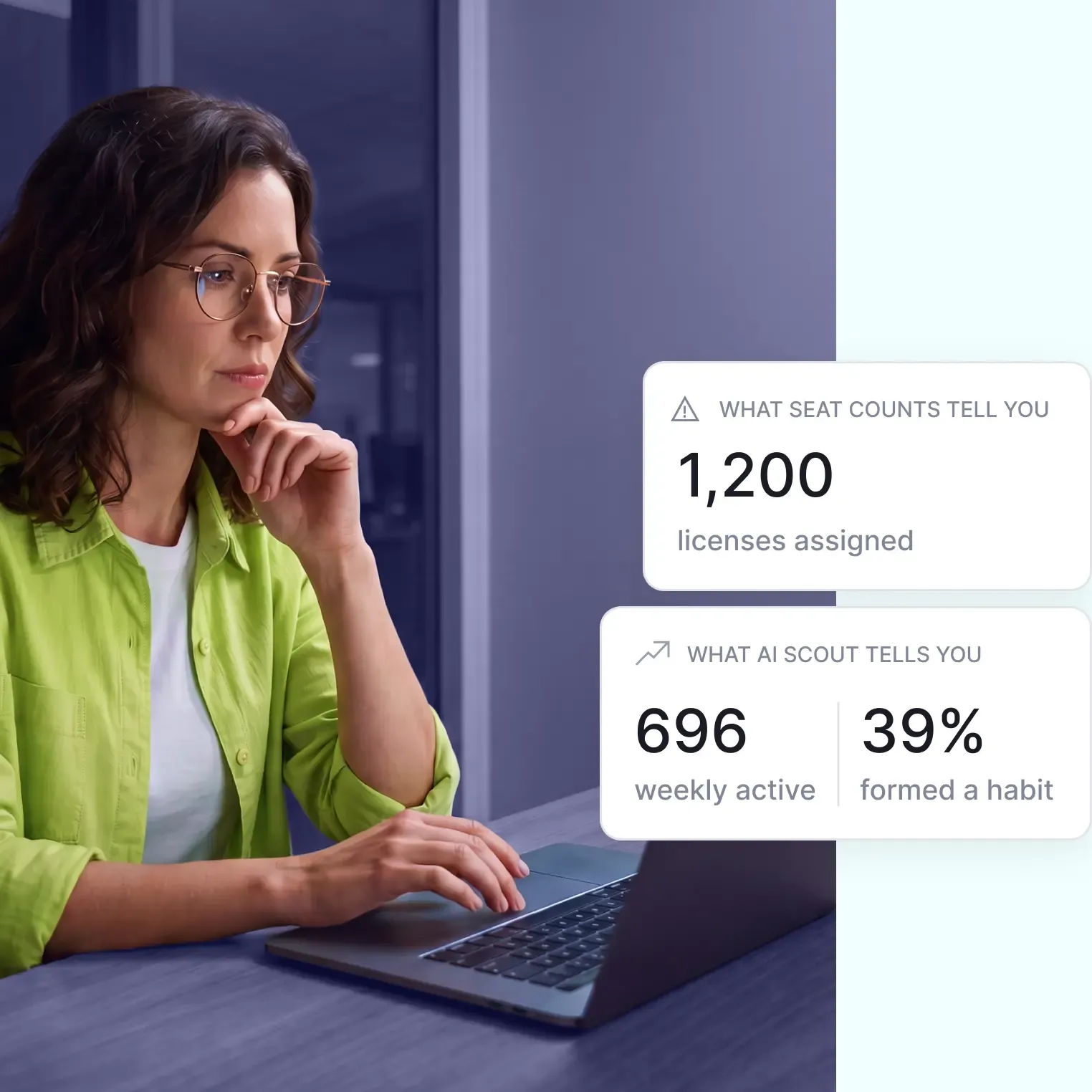
Provisioned seats can look like progress, even when employees rarely or never use the AI tools assigned to them. Without active user data, unused licenses and weak adoption remain hidden.

Initial AI use never becomes a habit
Initial interest does not always become regular use. Without tracking retention and usage frequency, you cannot tell whether AI is becoming part of everyday work.

Investment decisions are difficult to justify
Renewal and expansion requests made without measured activity leave finance teams with assumptions instead of real evidence that the investment is delivering value.
TRACK AI ADOPTION
See where AI adoption takes hold – and how fast
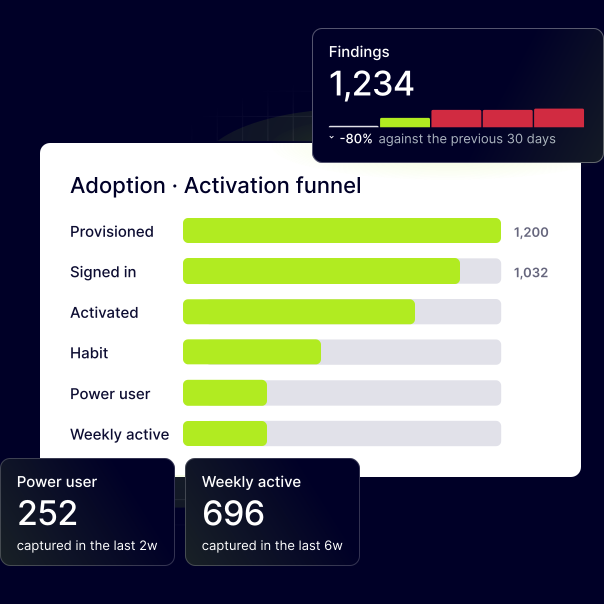
Turn previously invisible AI usage into a clear picture of adoption. Compare activity across teams, understand which tools employees rely on, and track how usage grows week over week.
- Adoption by team Measure active users to see where AI has gained traction and where it has not.
- Tool mix See which AI tools each team relies on and which ones are gaining ground.
- Adoption trends Quantify growth over time instead of relying on assumptions.
GOALS VS. REALITY
Set adoption goals you can actually measure and report
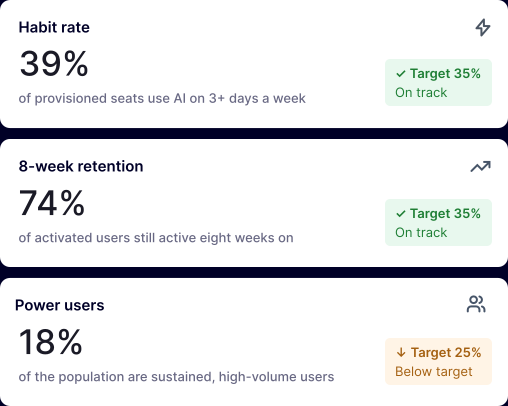
Set targets for habit rate, user retention, and power-user growth, then compare each KPI with actual performance. NordLayer AI Scout shows whether adoption is building lasting habits, not just initial interest, so you can spot gaps early, strengthen enablement, and report progress with confidence.
REAL USER ACTIVITY
See how many assigned seats become active users
The dashboard shows whether employees actually use the AI tools you provide, not simply whether seats have been assigned. Every adoption metric is tied to a real account, while prompt content stays private and is never analyzed.
- Track WAU and MAU against provisioned seats week over week.
- See whether adoption is climbing, plateauing, or declining.
- Find where adoption is lagging by comparing activity across teams and AI tools.
ADOPTION DEPTH
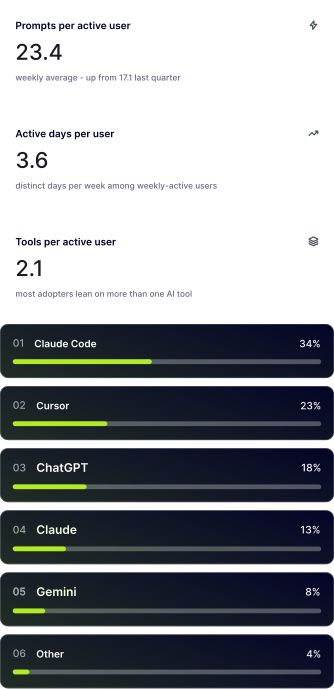
Know how often employees use AI – and which tools they choose
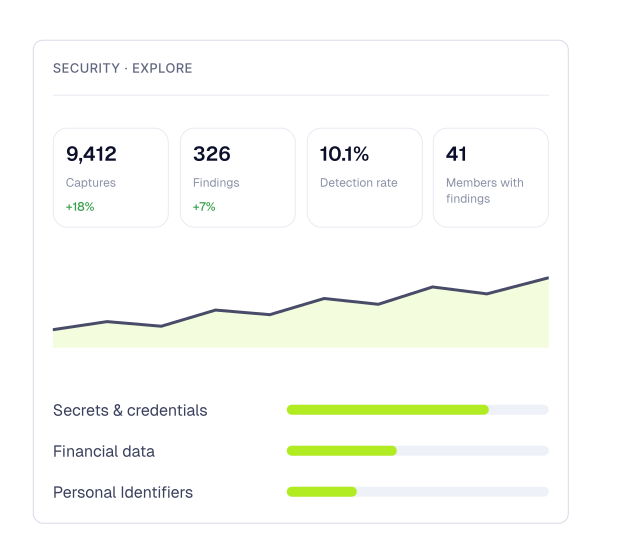
Go beyond active user counts to understand how deeply AI has become part of everyday work. Track prompts per user, active days, and tools used, then see which AI apps account for the most activity.
Make AI adoption visible, measurable, and secure
TRENDS AND HISTORY
Track AI adoption over time and keep a clear trail
See how usage changes across your organization, and maintain a clear record behind every trend. Compare periods, identify drivers of adoption, and export the data for reporting.

Track adoption trends
Follow weekly and monthly activity to see when AI usage grows, levels off, or declines.

Explain what changed
Break trends down by employee, team, department, and AI tool to identify where changes in adoption come from.

Maintain a reporting trail
Export historical usage data for leadership updates, internal reviews, and compliance audits.
Additional info
Frequently asked questions
Secure AI adoption means expanding the use of AI while maintaining visibility, protecting sensitive data, and managing risk. It helps organizations encourage productive AI use without losing control over the tools employees access or the information they share.
The main risks include shadow AI, sensitive data exposure, noncompliance with regulations, and a growing attack surface.
NordLayer AI Scout shows which AI tools employees use, how adoption develops across teams, and where sensitive data risks emerge. This helps organizations govern AI use, support teams where adoption is lagging, and make investment decisions based on real activity.
Organizations can measure AI adoption by tracking active users, usage frequency, retention, power users, and tool preferences over time. Comparing these metrics across teams and departments reveals where AI has become part of everyday work and where adoption needs more support.
Start by comparing provisioned seats with weekly and monthly active users. Then, track retention, usage frequency, adoption growth, and engagement by team and tool. These metrics show whether employees are using the AI tools provided and help inform future spending decisions.