Cybersquatting detection
- Monitor threats continuously across all top-level domains.
- Use AI-powered risk analysis to identify and prioritize threats.
- Get real-time alerts on domains threatening your brand.
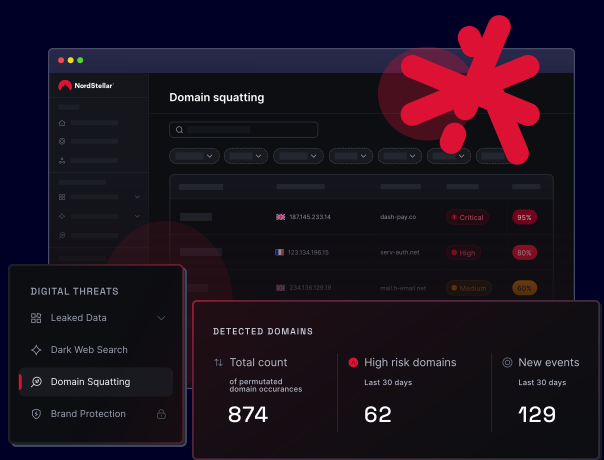
What is cybersquatting?
Cybersquatting, also known as domain squatting, is the illegal practice of registering domains of well-known, trademarked brands with the intent of profiting. In many instances, the domain owner will offer to sell the domain to the trademark owner at an increased price.
But cybersquatting can also involve abusive activities, like phishing, malware distribution, or hosting fraudulent content. In such cases, the domain registration is designed to divert the traffic from the trademarked brand to steal credentials or collect user data.
EXPERT TIPS
Ways you can prevent cybersquatting
Preventing cybersquatting can be a complex process, but you can make it easier by taking some precautions:

Register similar domains
When you register your .com domain, secure top-level domain variations, such as .com and .net. While registering all possible variations is impossible, forcing scammers to rely on typos and hyphens to imitate a domain significantly reduces the risk of brand impersonation.

Monitor domain registrations
Threat exposure management platforms can turn cybersquatting detection into an automated and efficient process, saving you time and resources. Cybersquatting detection monitors new and expiring domains, evaluates risk, and maintains a smooth user experience.

Trademark your brand
Registering your brand as a trademark provides legal ownership of your name. If you ever need to go the legal route, your case would be significantly stronger as imitating a trademarked brand would be classed as copyright infringement.
SEE THE VALUE
How does NordLayer Intelligence cybersquatting detection work?
Cybersquatting detection includes various techniques to identify potentially malicious domains:
Continuous monitoring and analysis
NordLayer Intelligence by NordStellar continuously monitors for domain registrations or changes, together with SSL transparency logs.
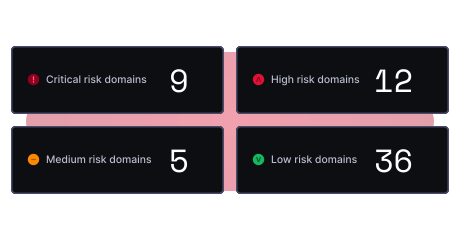
AI-powered threat assessment
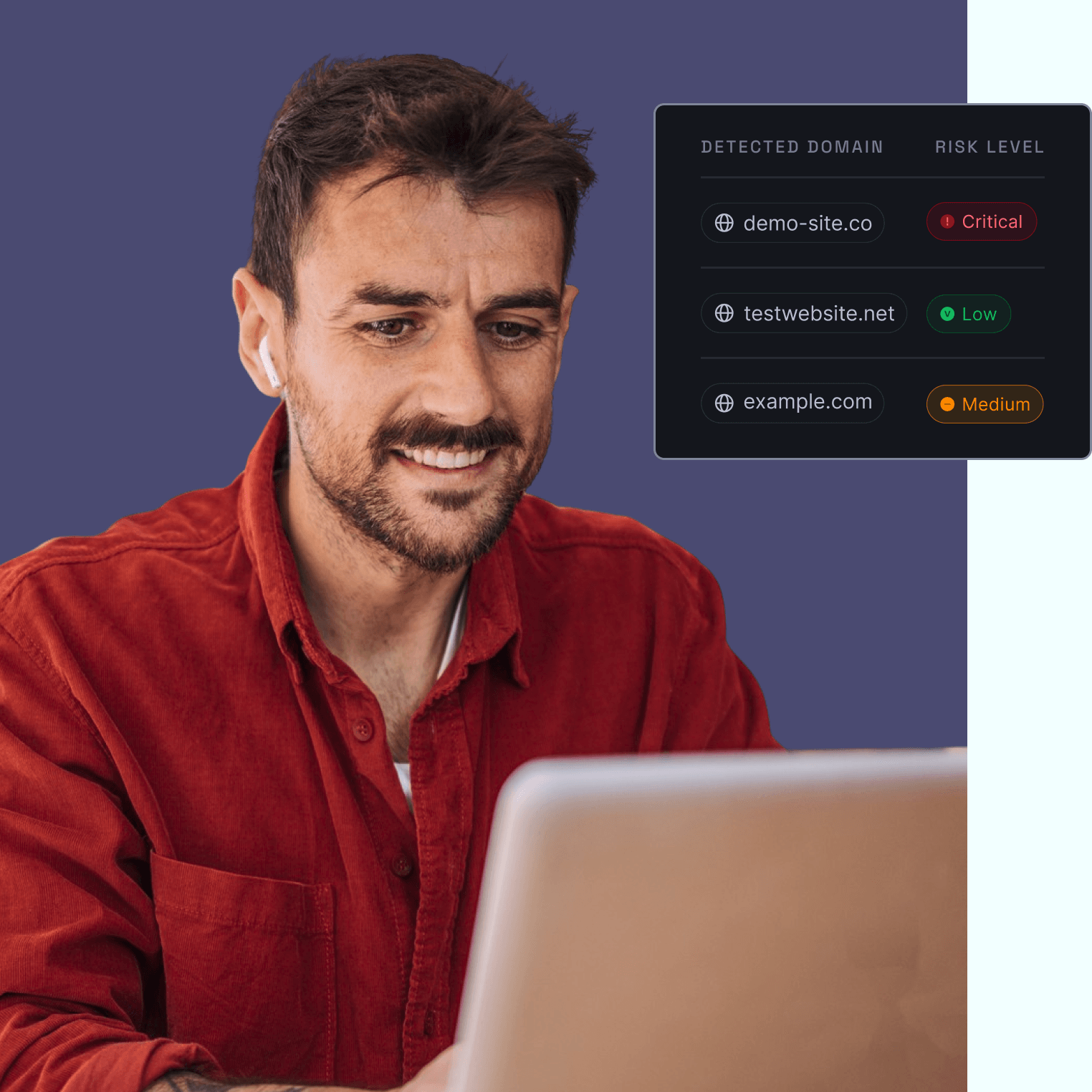
Detected domains are analyzed by comparing visual and content similarity, while AI further examines detected threats, providing detailed information including specific threat types, severity levels, supporting evidence, and recommended remediation actions.
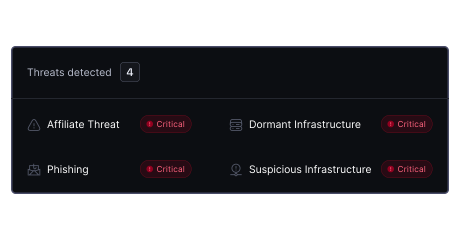
Real-time alerts
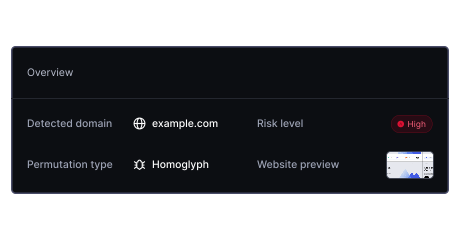
NordLayer Intelligence by NordStellar generates real-time alerts, based on configurable criteria, providing a detailed view of each suspicious domain. It includes screenshots, redirect chains, WHOIS information, and other similarity metrics, allowing seamless incident tracking and resolution.
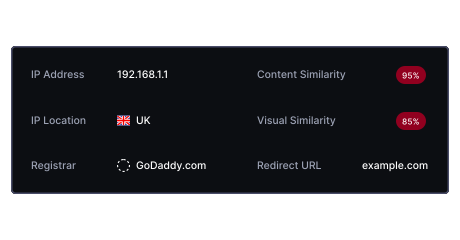
In-depth investigation and resolution tracking
The NordLayer Intelligence platform offers a detailed view of suspicious domains, including screenshots, redirect chains and similarity metrics. You can track identified threats and resolve them efficiently.
THE BENEFITS
Why does your business need cybersquatting detection?

Protects brand reputation
Maintain customer trust and loyalty by eliminating infringing domains around your brand.

Prevents phishing and malware
Identify malicious activity around your brand before it escalates into widespread phishing attacks.

Improves security posture
Gain visibility into potential threats surrounding your brand, enabling proactive measures and timely resolution.

Saves costs
Timely resolution helps your organization save time and mitigate potential costs associated with fraud, legal disputes, and reputational damage.

Retains traffic
Cybersquatting feature prevents malicious actors from diverting potential customers, protecting online sales.
Ready to put a stop to cybersquatting?
Contact us to see how NordLayer Intelligence bu NordStellar can help keep your brand reputation and customer data secure.
beyond cybersquatting detection
Explore more security solutions by NordLayer Intelligence
NordLayer Intelligence lets your cybersecurity team patch critical vulnerabilities and intervene at the earliest stages of an attack – before any real damage is done.
Brand protection
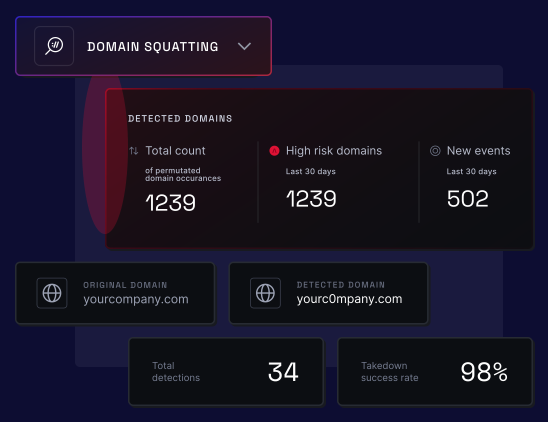
Identifies brand misuse and online impersonation across the web, social platforms, and app stores, and enables the quick removal of fraudulent content. It helps protect your company’s reputation and maintain customer trust, offering a detailed view of each potential threat.
Dark web monitoring
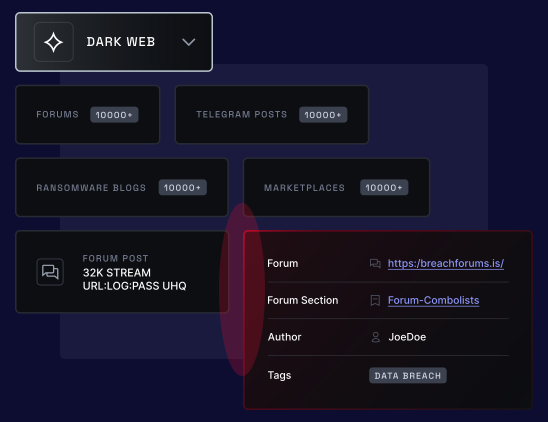
Detects leaked data and company mentions across hidden online spaces, such as hacker forums, illicit marketplaces, and private Telegram channels. It helps you identify threats targeting your business in real time and protect exposed consumer and employee information before it can be exploited.
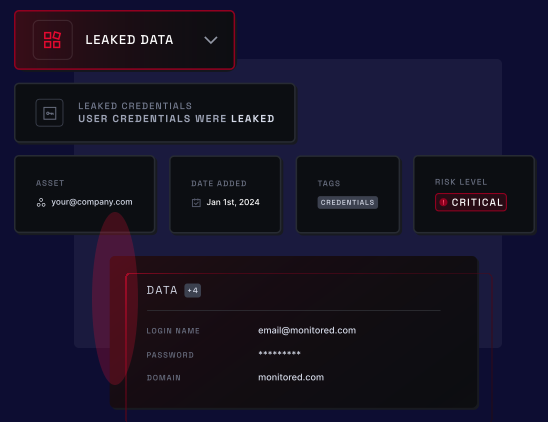
Data breach monitoring
Scans the deep and dark web for leaked sensitive information associated with your business, reviewing infostealer malware logs, leaked databases, and stolen credentials. It provides real-time alerts and full context on past and ongoing attacks to help minimize the risk of ransomware and account takeovers.
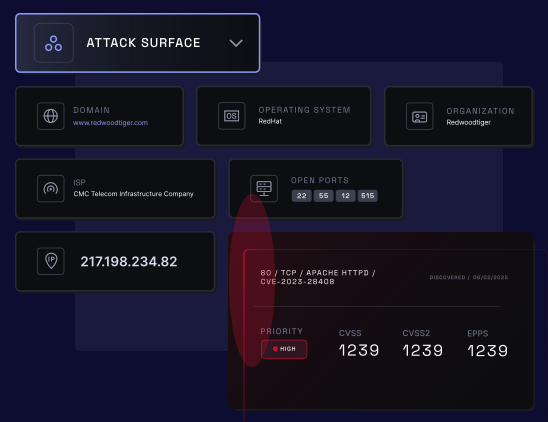
Attack surface management
Monitors internet-facing assets, such as domains, IP addresses, open ports, and outdated technologies, to identify exposed services, misconfigurations, and other security gaps. It also helps detect and verify vulnerabilities, giving your team clearer visibility into external risk before it can be exploited.
Additional info
Frequently asked questions
Domain squatting, cybersquatting, and typosquating are closely related but their meanings differ slightly. Cybersquatting and domain squatting both refer to the practice of registering domain names that imitate well-known brand names, often with the intent to profit or mislead users.
Typosquatting is a type of cybersquatting that involves registering a domain with slight misspellings of trademarked brands. For example, registering nordlaayer.com or nordlayeer.com, instead of nordlayer.com.
NordLayer Intelligence by NordStellar covers 16 different types of cybersquatting that involve typosquatting, addition, bitsquatting, cyrillic, homoglyph, hyphenation, insertion, omission, pluralization, repetition, replacement, subdomains, transposition, vowel swap, dictionary attacks, and TLD swaps.
Yes, cybersquatting is illegal. The Anticybersquatting Consumer Protection Act (ACPA) defines cybersquatting as the bad-faith registration, use, or trafficking of a domain name that is identical or confusingly similar to a trademark or personal name, with the intent to profit from it.
Identifying cybersquatters can be difficult, as threat actors can register numerous similar domain combinations using various cybersquatting techniques. However, with platform like NordStellar, you can easily spot and act on malicious domains.
Detecting cybersquatting early is crucial. If left unchecked, malicious actors can exploit your brand to divert traffic, deceive users and distribute malware or phishing, negatively impacting your organization. Undetected cybersquatting can continue for months, causing significant damage to your company’s revenue and reputation.
Various security teams can benefit from NordLayer Intelligence by NordStellar’s cybersquatting detection. It helps security analysts receive real-time alerts about potentially harmful domains, threat intelligence analysts can integrate domain squatting into their threat detection workflows, and brand protection teams can proactively monitor for domain infringements.
If you’re affected by cybersquatting, start by gathering evidence of misuse and evaluating the potential risks. If you can find the domain owner’s information on WHOIS, try contacting them to find a solution, or report the domain to the registrar.
You can also file a complaint through ICANN’s UDRP or take legal action under the ACPA if you own a trademark. In cases of fraud, report the issue to relevant authorities. For example, malicious domains can be reported to Google Safe Browsing, Microsoft SmartScreen, and your country’s national cybersecurity agency.